

a criticism of some recent buildings as architecture at the University of Colorado at Boulder including the new Center for Community and Wolf Law Building and Bear Creek Apartments
house construction and being local
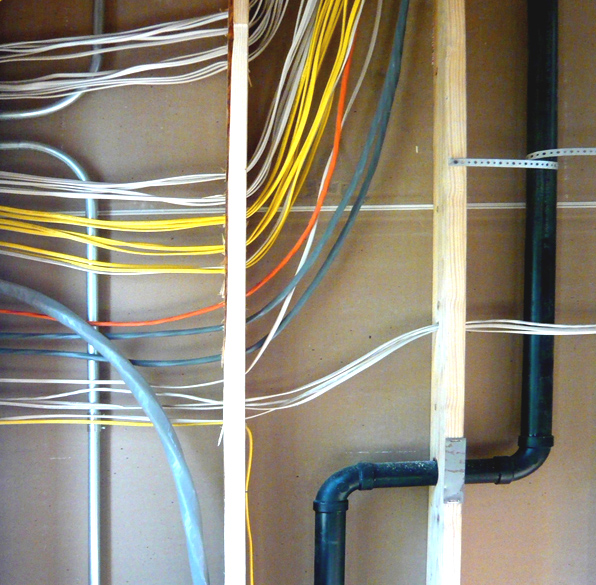
wires
In many ways, building or remodeling is about the most local, job-creating activity within the economy. Unless your construction is from very unconventional materials, they are most likely sourced relatively closely to the place of construction. "Local" may mean the US, not the preferred 500 mile definition, but very few of the things consumers typically purchase can even say that. Most of the wood in residential construction comes from the US or Canada (the importing of subsidized Canadian softwoods is a touchy subject for US manufacturers).
Almost all of the building stone and brick used here in Colorado is sourced within 500 miles. The woods used for cabinetry and trim, unless exotic, are usually US grown, as is the drywall for the most part. The most common import is probably tile, often from Mexico or Italy, along with countertops and roofing materials. Each of those have readily available substitutes. ( If you really want to view the relative costs of imports, take a look at stone importers. It is less expensive to have stone quarried in China or Brazil and shipped over to the US than to source it locally. This means that there are thousands of shipping containers carrying around the heaviest stuff imaginable - stone slabs, stacked like saltines, delivered across the US. Stone is a natural product and much of the wide variety of available colors are due to this global sourcing and we have become so used to the variety I am not sure we could do without it.)(More about the excess of shipping containers in the US in a later post.)
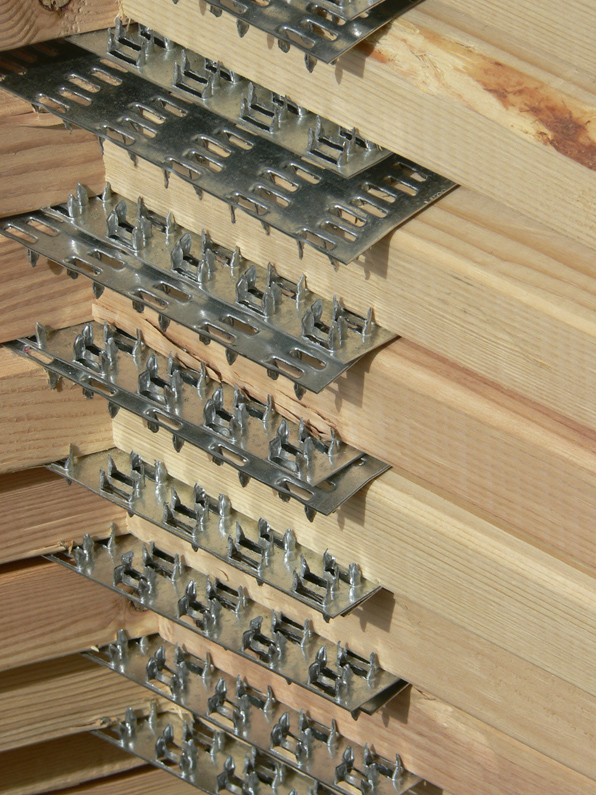
trusses
For residential projects, labor costs represent about half the total hard costs of the entire project. And of course, the labor of construction is most often local. For residential projects, rarely do the subcontractors and laborers travel much more than 100 miles to the jobsite. Of course, most of the soft costs of construction - architects, engineers, surveyors, etc. are also usually local as well.
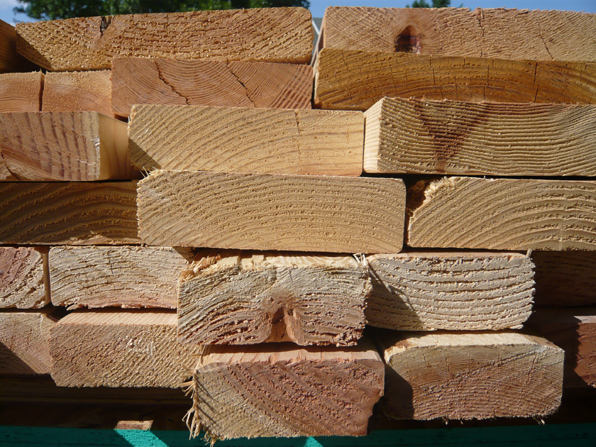
wood
So, next time you see someone building a house or an addition, even a gargantuan edifice, remember that what you are seeing is the unconstrained and unforced redistribution of wealth. From aspiring homeowners to local carpenters, masons, laborers, roofers, runs the stream of money like the braided channels of a river across a delta, from a single source to a thousand rivulets.
after the fire - Sunshine Canyon house completed

SZ LR 01
Eighteen months after the devastating Fourmile Fire swept away so many houses in the western foothills of Boulder, we have finally completed construction on a new home for Lynn and John Stasz. Like all projects it has been an exciting, frustrating and time-consuming task for everyone involved. This has been especially true for Lynn and John who did not decide they wanted a new house, but rather that decision was forced upon them.
These images are just some recent snapshots I have taken, not the professional photographs that lends so much to the look and feel of the house. However, the photos do reveal much of the intentions of the project - to make a home again in the mountains that is simultaneously open and protective, light and airy but also firmly rooted to the earth and sheltered under the sky.

SZ Master Bathroom 03
A couple of weeks ago Lynn and John were able to spend their first nights sleeping up at the house, in the landscape that they have called home for 27 years. We are really pleased to have been a part of making that happen and look forward to sharing a beer with them on the terrace. Much thanks as well to Cottonwood Custom Builders. Marc Anderson, Jeff Hindman and all their crew have taken the care and concern to make a nicely detailed, solidly built house and made the work of me, the architect, a little easier along the way.
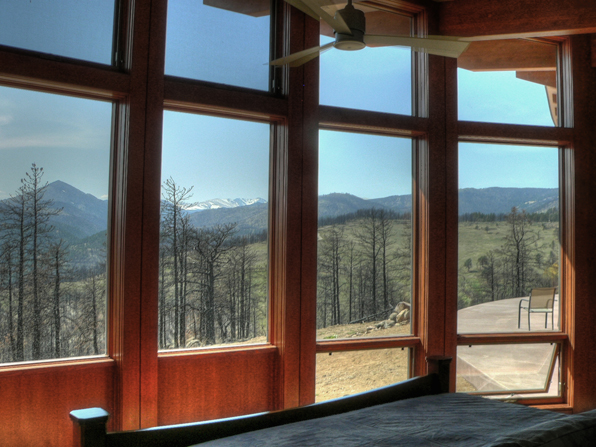
SZ Master Bedroom 02
Congratulations Lynn and John and welcome home.
an architect's education - juries
I sat on an architecture jury the other day and was reminded of a post from a while ago that laid out the necessity of this fraught process for the education of an architect. So a bit of recycling here, with some more recent thoughts on the changing nature of architectural juries. The basic process for eons for educating architects has relied heavily on the jury system.
Dakota Ridge Village house, construction progress
MT framing 01
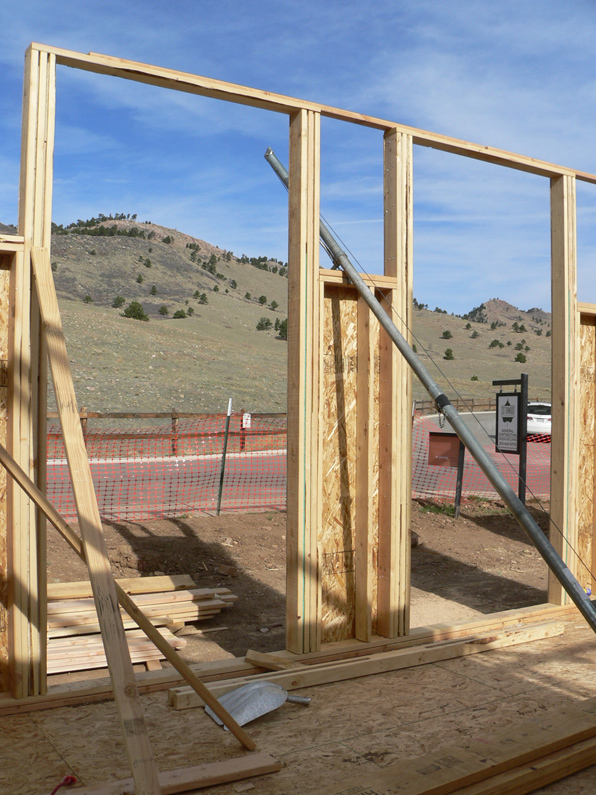
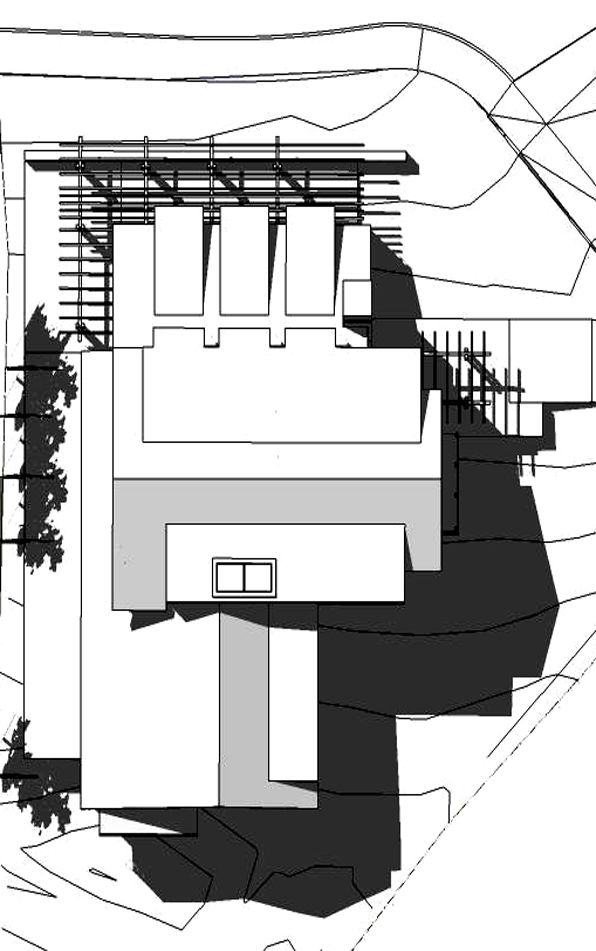
Framing has begun in earnest on a new house we designed for the Dakota Ridge neighborhood in north Boulder. Weeks of excavation and foundations do not lend much to the physical presence of the building, but in few short days, a flurry of framing happens and the building begins to take shape.
The pace of construction is not apparently consistent. The largest single physical change happens during framing when the building takes its initial shape and the scale and size of the elements can be clearly seen. This all happens rather quickly - a few weeks - compared with the overall one year building schedule. What follows next is the time-consuming effort to put into place all the basic plumbing and electrical and mechanical systems. This rough-in period often far exceeds the framing and seems painfully slow by comparison. Weeks go by with very little changes - a pipe here or there, some electrical wires - and the pace seems glacial when set next to the dramatic physical transformation that takes place during framing.
MT white plan
Framing certainly is the most heroic part of the construction phase, when mere lines on paper are transformed into the very solid stuff of beams and rafters, joists and studs. It is the most exciting for me as an architect as I get to see the first real glimpses of the building on the landscape, the scale and proportion of rooms and the presence of the building. It comes as a great disappointment to most homeowners that the end for framing is only about one third or less of the project's completion. It is a marathon, not a sprint.
abandoned buildings
abandoned 01
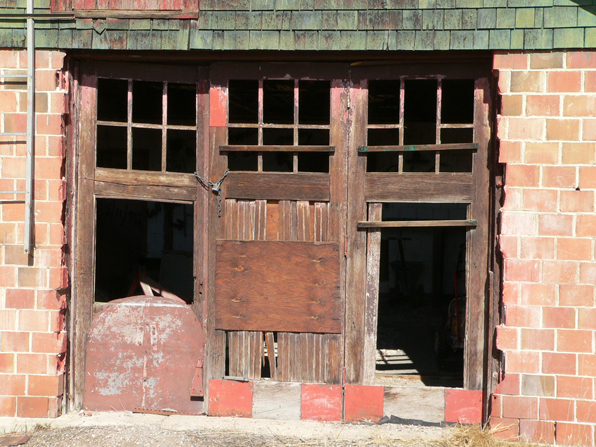
What is the fascination with abandoned buildings? There is certainly some attraction to the mystery and faint danger of these places, but I think there are darker forces at work as well.
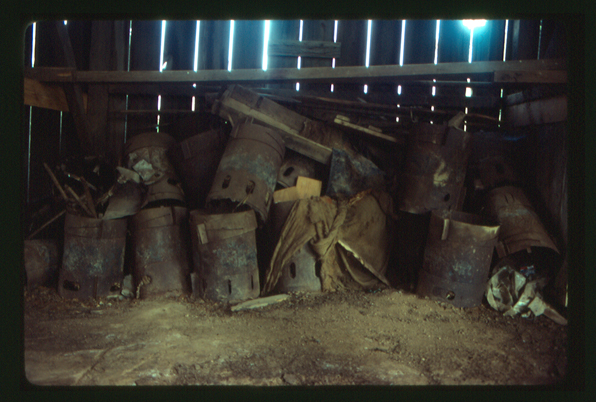
In abandoned industrial sites, much of mystery of the place has to do with the fearful contrast of the quiet stillness of the place once so vibrant with noise and activity. Of course this is also a confrontation with the humility of realizing that the promise and productivity of an industry or a hospital can be so swiftly displaced with the simple closing of the doors. These places do seem so full of ghosts because so often the signs of human activity, the equipment and architectural elements that were designed to be engaged with the body, are still there, echoing the uses that have long since disappeared. The door knobs and levers, the switches and furniture are all scaled for us, made for us, and are waiting for us to return. I think this has much more to do with why these places attract us than the recognition of them as B-movie horror sets and gory extravaganzas.
abandoned 03
Of course there is a whole community of folks out there that explore and photograph these places, known as Urban Explorers or Urbex. Their photos are all over the interwebz and they document more the desolation of these places than their lost grandeur. These folks and their photos are more akin to dystopian novelists than the pioneering work of the early preservationists who documented the abandonment and destruction of these places as a last desperate attempt to pull the handbrake of so-called progress.
For my part, what is so intriguing about especially abandoned houses are the fading signs of seemingly tranquil domesticity decaying with time.
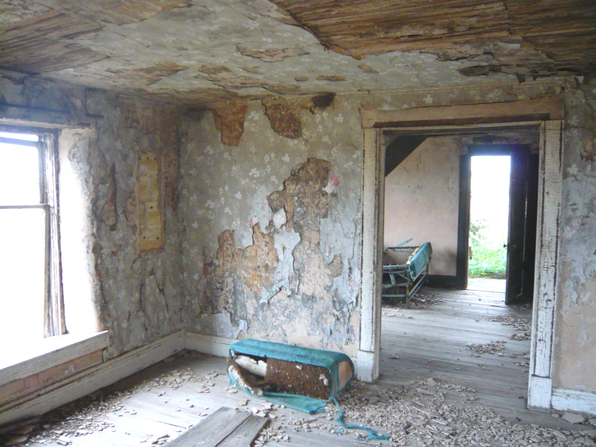
abandoned 02
These abandoned houses make you feel small, in the way that walking around an unfamiliar city for the first time does. There is clearly a continuum that you are a part of, that you recognize, but that clearly posits you as just a tiny, maybe unconsequential part of the whole. That is something devastating to the ego and thrillingly liberating, especially for this architect. It is a kind of existentialism laid bare and maybe even exposed in its own self-importance.