info for home-making

materials, construction materials, and house form

In case you were wondering if its true that your building materials go a long way to determining a building's shape, I give you the following:

The 1980's historical pastiche of Po-Mo as rendered in the very appropriate foam blocks (not so far from the EIFS of the time)

the large, rambling suburban "Western" McMansion that pervades the front range here in Colorado, as executed in, of course, Lincoln Logs and their associated plastic cousins

and of course the Flemish, stacked masonry house with Dutch tulip garden out front as rendered in Legos.

All of the above design and construction credited to M. Gerwing Architect's youngest studio assistants.

Stair as theatre- part three

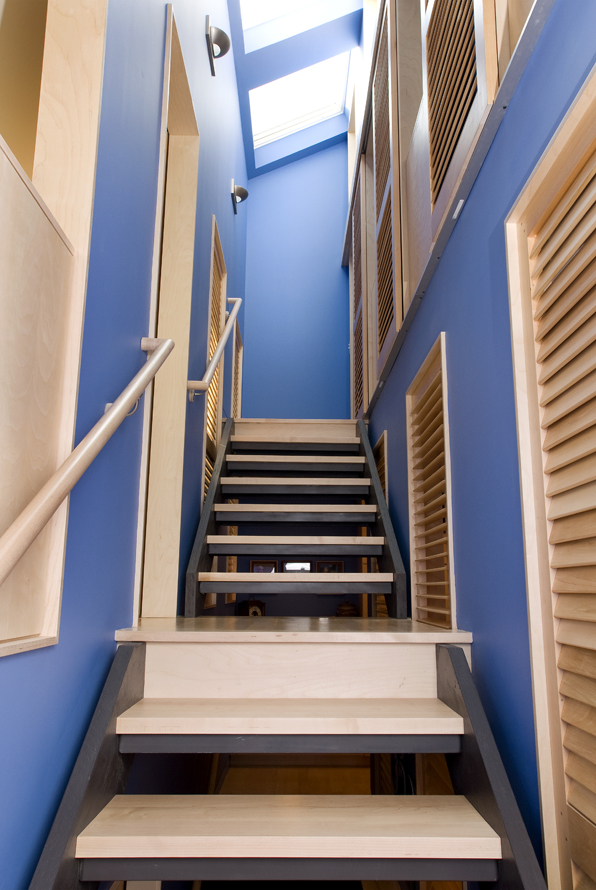
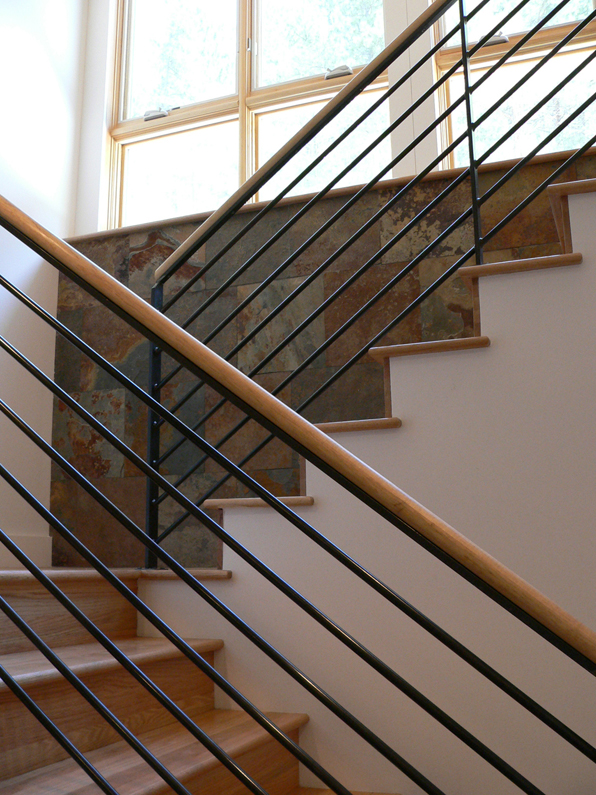
In the previous posts I have remarked on the drama of stairs.  That drama is certainly reinforced by the actual design of the stair - its details and materials, certainly its shape and how sharp or relaxed the descent or ascent.  Unfortunately, as architects love stairs, we can get a bit carried away with this sense of drama and go a bit overboard.

The drama here may have a lot more to do with the probability of  falling and ending up as a bloody heap at the bottom of the beautiful stairs.  Architects complain all the time about building codes.  However, some might make a bit of sense.  Like providing a handrail.  Or maybe guardrails.  Or treads that you won't slip on.  Or all of the above.

This stuff is known in the industry as "stair porn".  It looks a bit shocking and bit amazing and not very good for you.  This kind of visual drama misses the point entirely as far as I'm concerned.  The drama of a stair is the potential and very real moment of moving up or down it.  The stair literally transcends, breaks you free from the surface of the earth or at the very least it is Scarlett sweeping down to Rhett.  If the stair itself requires so much attention to the careful placement of every foot and hand, then maybe that heightens the tension of the transition but only in the most negative and frankly childish sort of way.  These glossy stairs that work so hard in their minimalism and lightness to defy gravity all seem to flee from the real potential of a stair - engaging gravity itself, pulling yourself up or plunging down.

Stair as theatre - part one

Stairs are inherently dramatic.  As the transition from one level to the next, they break the plane of the ceiling or floor and immediately engage the psychological territory that Gaston Bachelard so elegantly describes in The Poetics of Space.  Going up is to climb toward the sky, going down is to delve into the earth.  Hierarchy is more than simply implied, it is thrust upon us.  This post is going to be the first of a series in examining stairs and their architectural expressions and meanings as well as their technological parameters and code-driven outcomes.  As they are also about the most-expensive-per-square-foot item in a single-family house, a thoughtful approach to their design in each project, beyond purely visual aesthetics, should be warranted if not cherished. In a residence, stairs also often mark the transition from public to private space.  In a traditionally organized, multi-level house, private bedrooms are most often found on the upper levels and the more public rooms of the house - living room, dining room, etc. - are most often on the main or ground level.  (This  is only very general and the exceptions, like piano noble plans, can be all the more dramatic by comparison).  Moving up or down the stairs is often the most profound transition between realms.  The stair itself can ignore this transition but doing so clearly wastes an opportunity to bring richness and depth to a project.

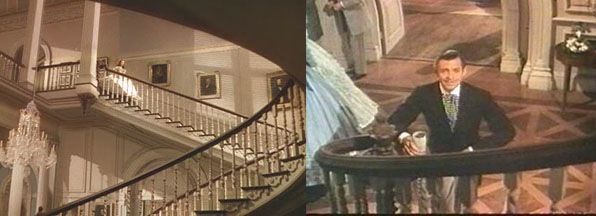
The most dramatic example I can think of in the use of the stair as a piece of private-public theatre is the large, sweeping formal stairs of large houses like the southern mansions mentioned in the last post.  The best visual evidence of this is actually from the theatre, the two stairs in Gone With The Wind - the Twelve Oaks sweeping double stair and the massive Tara stair.  Actually there are a tremendous number of shots in the movie that use the stair as a device, both deserve best-supporting awards.

Rhett waiting for Scarlett at the bottom of the stair is a great piece of sexual tension as she descends from the innocence of her childhood bedroom down to the world and all its desires and dangers. (Maybe more like a spider descending upon its prey however.)  I especially like the following still:

Here the stair is clearly not only the separation between private and public, but also defines the roles of men and women.  Scarlett carefully choosing which tread is close enough but not too far is maybe the best descriptor of how a stair can work to both join and separate both the physical and psychological areas of the house.

and so we begin...

sz011

sz011

A number of months ago, immediately on the heels of the Fourmile Fire, I was hired by a couple who just lost their house to design another.  It has been a great process even in the face of that tragedy, with clients who reaffirm why I do residential design.  Their thoughtfulness and commitment to the project has no parallel in any other building type.

Today, at noon, we received our Building Permit from Boulder County.  True to their word, they greatly expedited the process, cutting it down from 6-8 weeks to about one.  My heartfelt thanks go out to the Land Use and Building Department staff, especially Kim Sanchez, Gary Sanfancon and Michelle Huebner who have made a painful process considerably less so.

sz012

sz012

So we begin.  Construction will ramp up here in a few days and I will be posting updates as we progress from excavation through foundations, framing, roofing, etc.  Additional special thanks goes out to Jeff Hindman, Kim Neill and the crew at Cottonwood Custom Builders who were brought on early in the design process and have helped guide the project and its budget to a success launch.

SZ southeast

SZ southeast

architecture - climate and region; some thoughts on southern mansions

I have been thinking  a lot lately about vernacular architecture and indigenous responses to local climate.  By that I mean how a building and design practice, over time, has found architectural solutions to solve some of the problems posed by heat and cold, sunlight and shadow, aridity and humidity.  Reading through some older posts on my delving into the possibility of trying to define a Colorado vernacular, it strikes me that very few of those examples I identified tackled the issues of heat and solar gain.  That might sound like a recent concern, more one of energy use and sustainability, but a few quick glances at traditional southern architecture reveals design/technological solutions that we have largely forgotten in the age of air-conditioning.

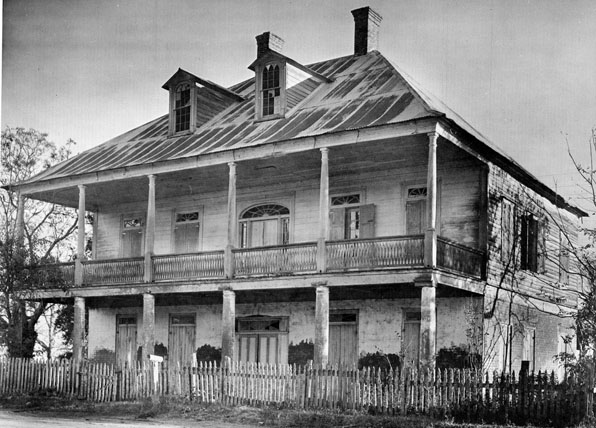
These are images of traditional southern plantation houses in Louisiana from the book Ghosts Along The Mississippi by Clarence John Laughlin.  The book's oddities aside, it is a great document of these traditional houses many of whom are no longer standing.

The large wrapping porches and porticos of all these houses block the direct sun from hitting windows and exterior walls and create  a deeply shadowed interstitial space between interior and exterior.  The "technology" of the deep overhang results in a new kind of spatial experience, partly interior, partly exterior, which radically breaks down the stark privacy of the Georgian forms from which these models take much of their architectural character. It is maybe tragically ironic that these houses where slaves were an essential part of the culture and economy have in a sense a more casual relationship between public and private than their English precedents where servants were equally present but interior and exterior were sharply delineated.

Of course some of these houses owe more of their architectural lineage to Greek antecedents, but in ancient Greece's equally slave-owning culture, emphasis is directed inward to courtyards, not outward as in these southern Tara-like mansions.  Certainly the veranda was a convenient place for a plantation owner to survey his fields and from which to greet visitors, but the impetus for the porches was more climate-driven than programmatic.

More than echoing their Georgian and ancient Greek architectural origins, maybe these southern mansions, with their large, single roof forms owe more to that other model of agricultural manor house, the Palladian villa.  Although those villas of central Italy and the Veneto do not sport large, overhanging  porticos, like their southern mansion  cousins, they are singular buildings in the landscape, dominating the perspective in a single large architectural form.

The southern mansion prototype has become such a stark visual cliche that it is difficult to look beyond the ridiculous bad copies that it has inspired and look a little more carefully at the architecture.  And of course its association with slavery forever banishes the southern traditional mansion into a dusty drawer of architectural history.  However, a closer examination of its form and materials in response to climate and its adaptation and transformation of formal architectural modes grafted onto vernacular practice is a worthwhile study.  I am not suggesting that we adopt the form and replicate, South Fork ranch-like, a hybridized bastard McMansion morphology, but let's not throw the architectural baby out with the cultural bathwater.

(images by Clarence John Laughlin from Ghosts Along The Mississippi)

on the boards, February 2011

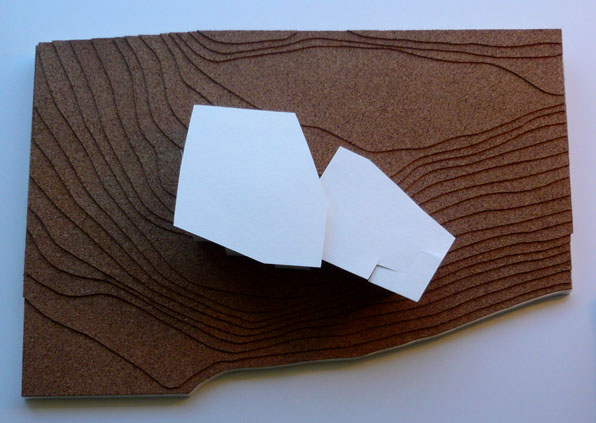
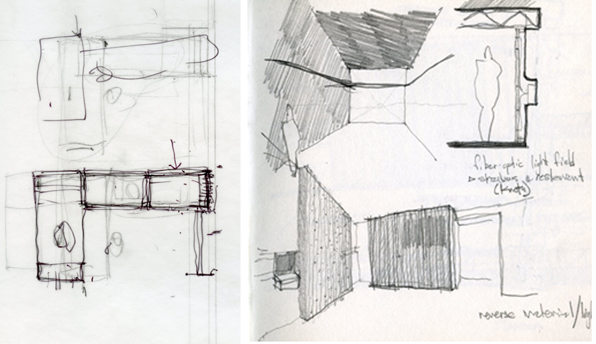
Our workload has started off with a bang compared to the last couple of  years.  We are working on a number of really great projects - a couple of new houses, a couple of renovation/additions, a couple of master plans and a few other things.

As I mentioned in a previous post, a number of our new projects incorporate universal design principals for clients who are either current wheelchair users or anticipate reduced mobility over the next decade or so.

In light of the massive downturn in architectural services that we have all experienced over the last few years, it is thrilling to have the office full of drawings and models of ongoing work.  Along with our office picking up the pace, a number of previously unemployed architect-friends of mine are working again and contractors are no longer singing the blues as fervently as in past months.

It is quite a luxury to be selective about projects again, to engage in projects that are interesting and challenging and not necessarily all about paying the bills and keeping busy.  The recent upswing in inquiries has focused my desire to choose projects based on the site and the client, not the size or cost.  We'll see how they develop ... stay tuned.